Incredible Farm-Fresh Egg,
How Do We Care for You?
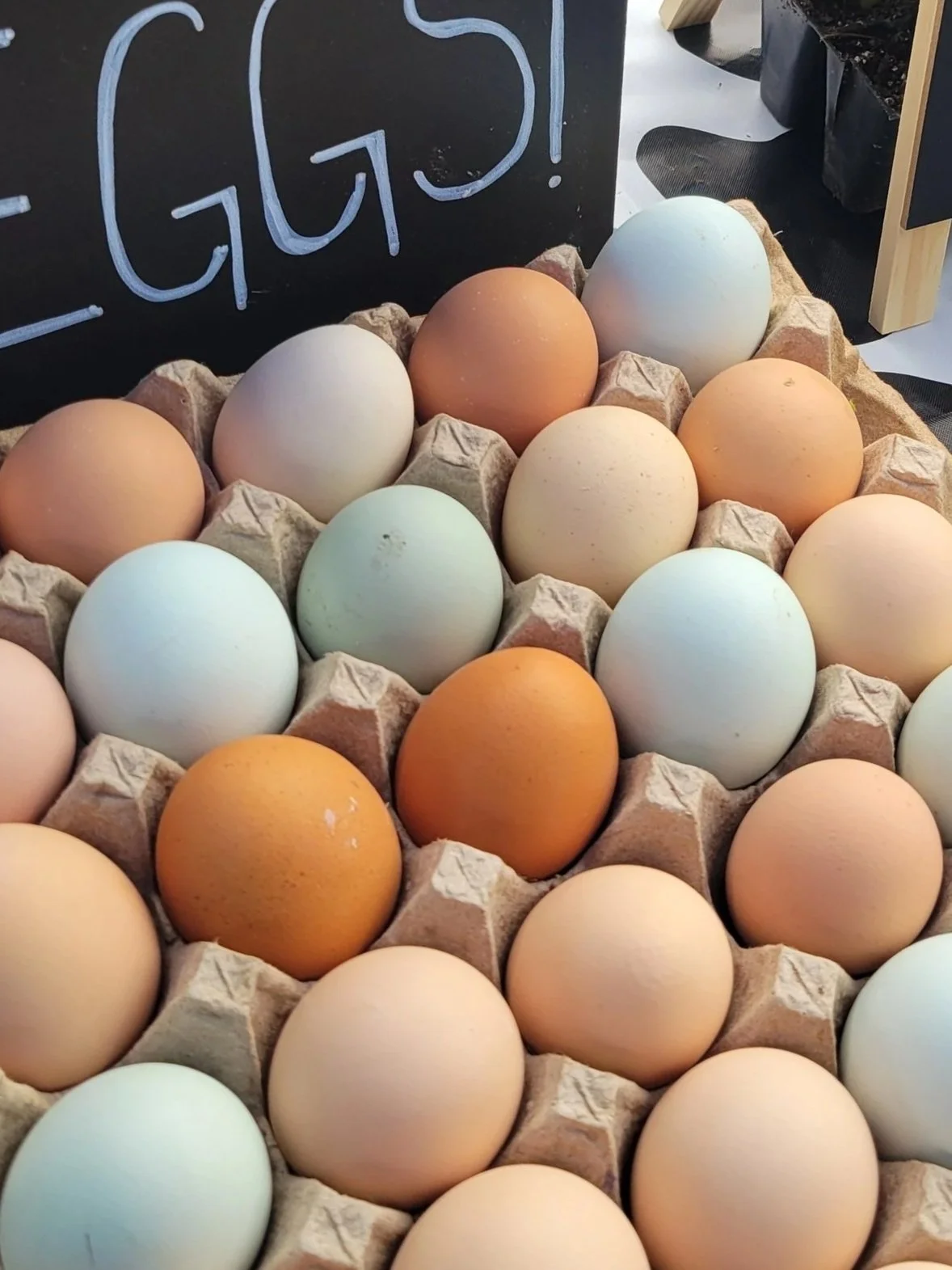
Look at you! You’ve supported local (maybe us – wink!) OR your own backyard chickens have finally provided and you now have some fresh eggs in your possession. Coop-fresh eggs are remarkably different from the eggs you buy at the store – they’re colorful, nutrient-dense, not uniform in shape (or size), and aren’t made “shelf-ready”. Thus care and storage for straight-from-the-farm eggs is also different. Before you stick them directly into the fridge (out of habit), let’s talk about how storage works for these special eggs!
Can I store farm fresh eggs at room temperature? Yes!... with some caveats.
Below is a guide – we hope it helps!
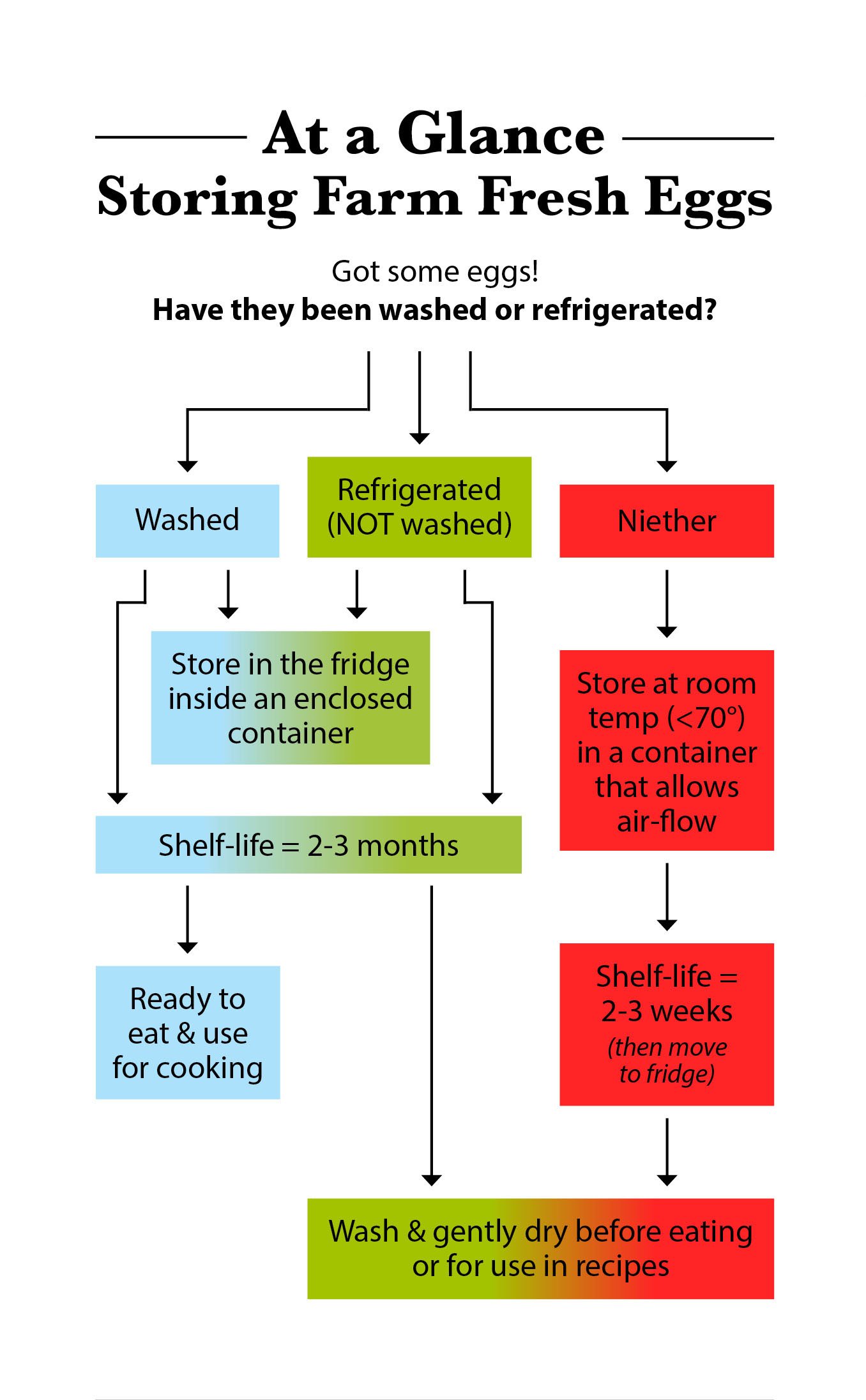
Your Eggs = Unwashed + Never Refrigerated
If you just got your eggs from your backyard coop or from your farmer friend and the eggs haven’t been washed yet, you may absolutely store your eggs at room temperature (around 70 degrees) on the counter or in an open shelf. They can safely be stored this way for 2-3 weeks. If you purchased your eggs from a farmer’s market or a farm stand, just ask if they’ve been washed or need to be refrigerated. When in doubt – refrigerate (see further down below). Be sure to store your eggs within a container that allows airflow and avoid areas that receive direct sunlight from a window, near a stove or anything that radiates heat.
Temperature plays a big role in how long your eggs will last on the counter. If you live in a warmer climate or if it’s the height of summer and your space frequently exceeds 75-80 degrees Fahrenheit, reconsider leaving the eggs on the counter. Heat deteriorates the egg’s internal quality at an accelerated rate – just something to keep in mind! The quality of the eggs diminish over time, even if the egg isn’t spoiled. As eggs sit, the whites become thinner and the yolk flattens. They will be safe to eat after 3 weeks but you can move them into the fridge after 2 weeks to extend quality – might not be the most photo-genic candidate for a sunny-side-up breakfast – will still work perfectly for baking!
Your Eggs = Unwashed + Refrigerated (at any point)
Now that you know how temperature is the most significant factor on how long an egg can hang out on the counter, storing them in the fridge will extend their taste quality. Perhaps you have a bazillion fresh eggs and can’t possibly eat/use them all within 3ish weeks, storing them in the refrigerator is your best bet. Refrigerated farm fresh eggs have a shelf-life of 2-3 months! Wow! Moisture from your refrigerator can build on the eggs, so best practice is to store them within a closed container.
Once an egg has been refrigerated, it should be stored in the fridge thereafter. According to USDA guidelines, “a cold egg left out at room temperature can sweat, facilitating the movement of bacteria into the egg and increasing the growth of bacteria.”
Your Eggs = Washed
These eggs come from nesting boxes, generally, sooooo they aren’t always the cleanest upon collection. If any eggs are really dirty, covered in manure or mud (it looks as if the chickens incorporated a mud wrestling pit in their space), you should wash them. Once they’ve been washed, they need to be refrigerated and, again, stored within an enclosed container to minimize moisture build-up. Fresh, washed, and refrigerated eggs are also safe to hang out there and then eat for 2-3 months!

Next up… Washing the eggs
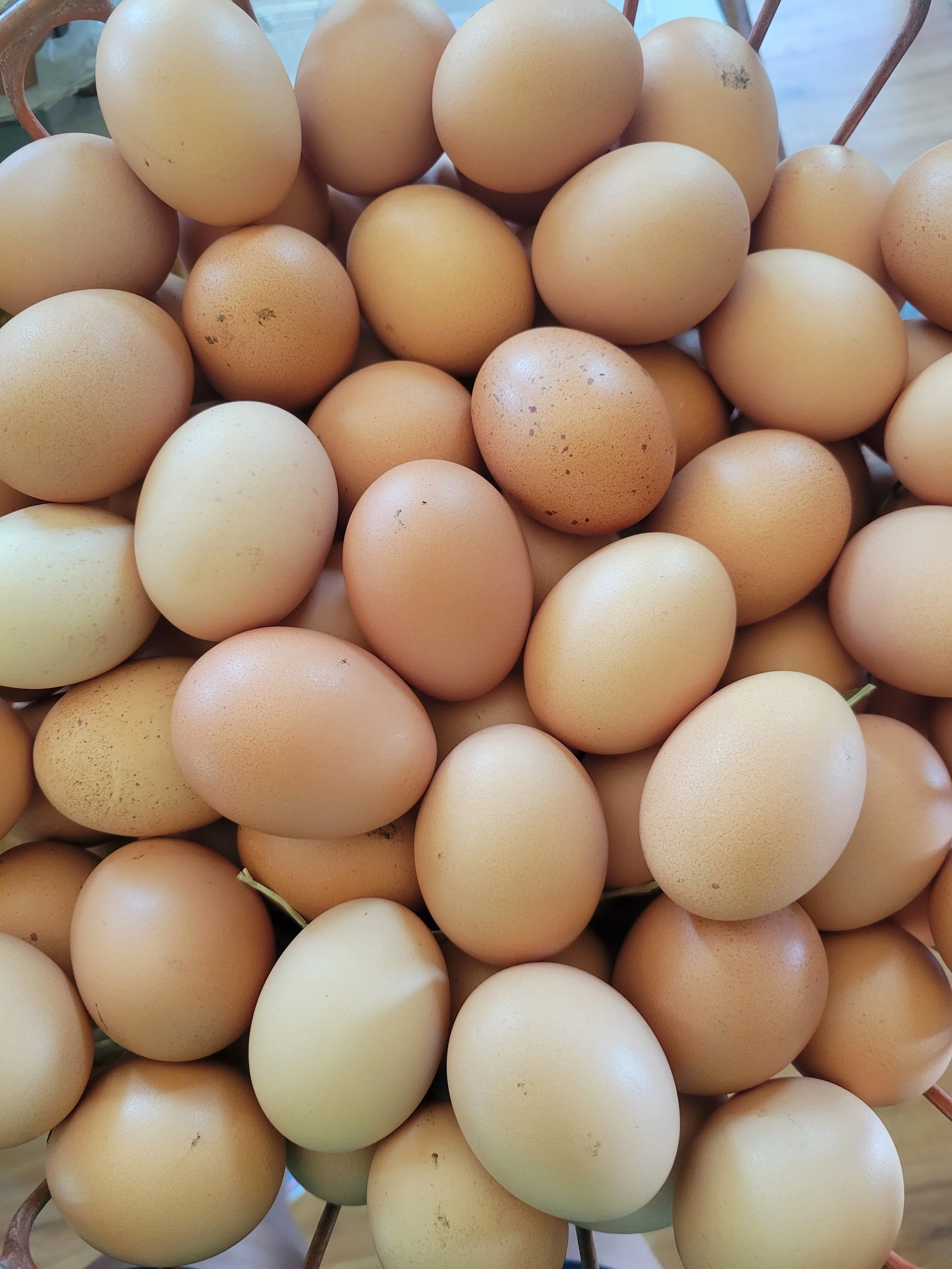
Lucky for us this process is not complicated. The goal is to not damage the shell or encourage bacteria growth. Easy right? Yep! If we can do it, you can do it. The how-to is below:
Rinse and gently rub under warm water. Use a soft sponge or cloth to wash away any debris – avoid scrubbing with anything abrasive
- There is no need for soaps, vinegar, or bleach (no!) to clean. The chemicals or odors can absorb through the shell.
- Washing eggs in cold water, can create a vacuum effect that pulls bacteria into the egg through the pores of the shellLet the egg air dry or dry with a towel
Place into an enclosed container and then into the refrigerator
The question of whether to wash fresh eggs is a hot topic. In the end you do whatever feels most comfortable and safe for you! If that means washing them and storing them in the refrigerator as soon as you get them into the house, go for it! We don’t wash our eggs until we plan to use them so that we can leave them on our counter. Our hens’ eggs make a lovely colorful display in the kitchen! (Plus they are always within reach!)
How is it ok to leave farm fresh eggs on the counter unwashed?
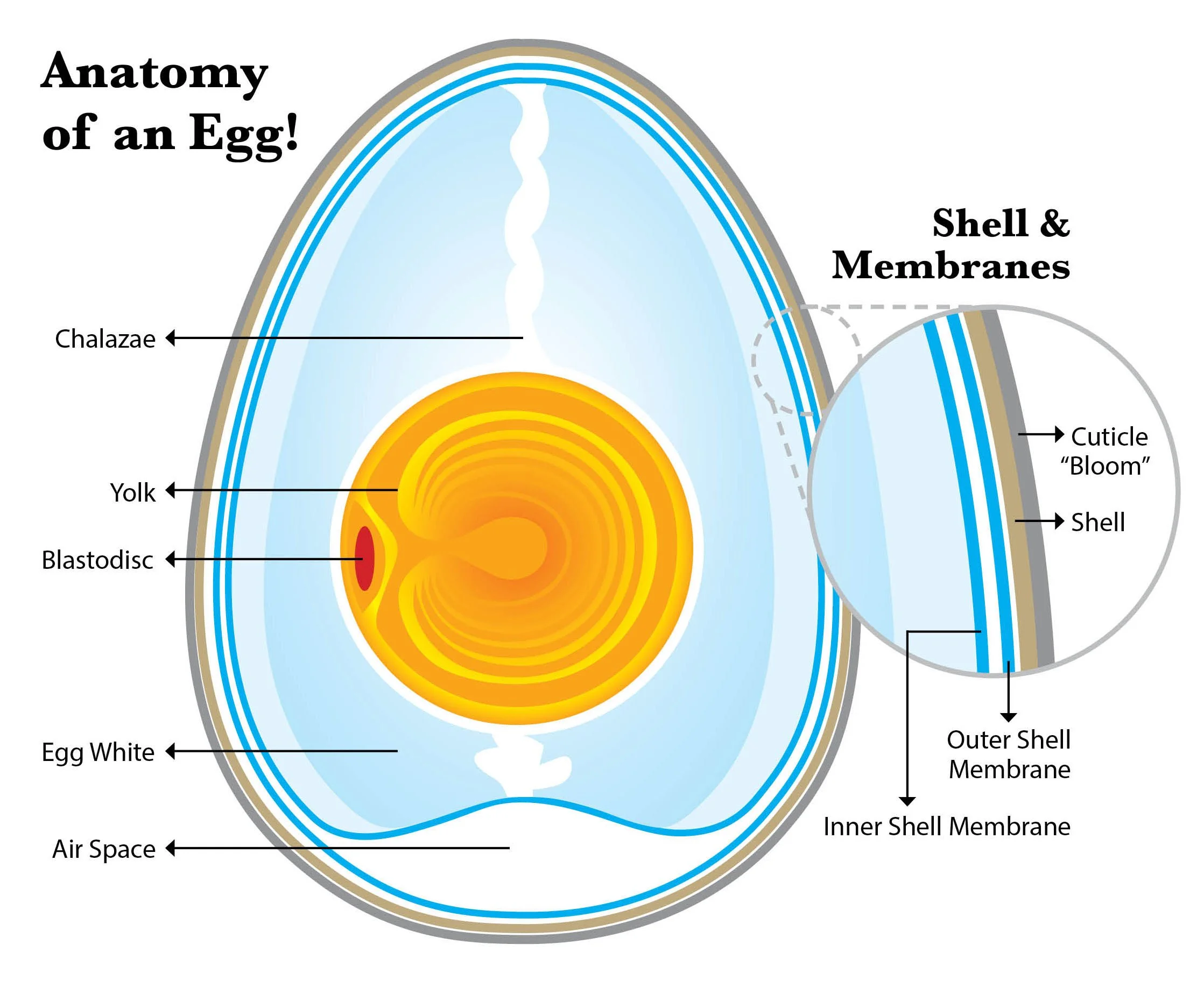
The answer? It’s the “bloom” also known as the “cuticle”. Freshly laid eggs have a natural protective coating on the outside of the shell – the bloom or cuticle. It effectively seals the otherwise porous eggshell from bacteria entering the egg. Nature’s way of protecting developing chicks in fertilized eggs. The bloom helps keep unfertilized eggs fresh, longer preventing bot the loss of moisture from the inside and the introduction of contamination. USDA standards for store-bought eggs removes the bloom through various washing processes (to ensure safety and uniformity) that then requires refrigeration.
Tips!
To extend the freshness of an egg, store round end up! There is an air sac within the round end of the egg and when it’s facing up it acts like a balloon of insulation helping to reduce evaporation and additional moisture loss. (See the Anatomy of an Egg graphic above)
Store Round End Up
If older eggs accidentally get mixed in with the newer eggs, there are a couple tests to try that will let you know how fresh an egg is.
Freshness Tests
Fill a glass or bowl with cool water and place the questionable egg inside
A fresh egg will lay on the bottom of the container or will stand up slightly
A middle-aged egg may partially float but will stay submerged
The higher the egg floats towards the top, the older it is
If it crests the water (a full-blown floater) it’s not good to consume
The Float Test
Crack the egg suspicious egg onto a clean plate
A fresh egg’s yolk will stand high and domed. Most of the white will be thick and gathered
A middle-aged to older egg will have a more flattened yolk and the white will spread and be more watery. If there is no odor, it’s ok to eat
A spoiled egg will be obvious! If it has a sulfurous/bad smell, is a grey-greenish color or cloudiness - don’t eat it, toss it in the garbage outside, and open some windows!
The Crack Test